GM's Decoupling China Supply Chain by 2027
The Great Decoupling: Analyzing GM’s 2027 Supply Chain Ultimatum
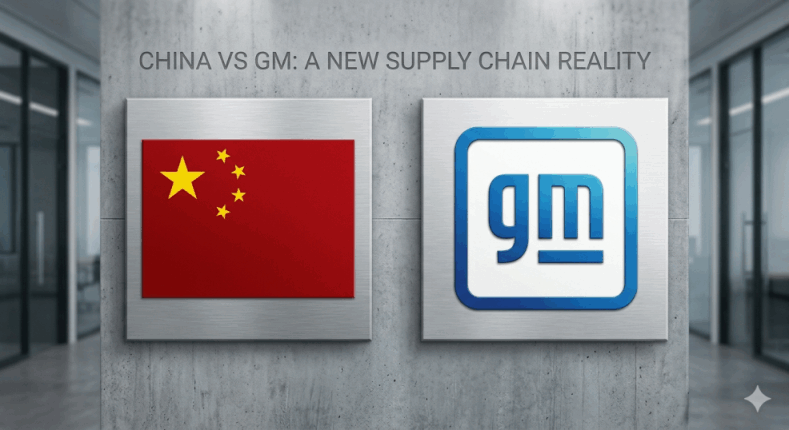
In a move that has sent shockwaves through the global automotive sector, General Motors (GM) has reportedly issued a definitive directive to its thousands of Tier 1 suppliers: remove all Chinese-sourced parts and raw materials from your supply chains by 2027.
This is not just a suggestion—it is a fundamental "rewiring" of how Detroit builds cars. As we look toward 2026 and 2027, this strategy marks a historic shift from prioritizing the lowest cost to prioritizing geopolitical resilience.
The Mandate at a Glance
Target: Thousands of Tier 1 suppliers providing parts for GM's North American assembly lines.
Timeline: A complete phase-out or "exit" strategy for many parts and raw materials by 2027.
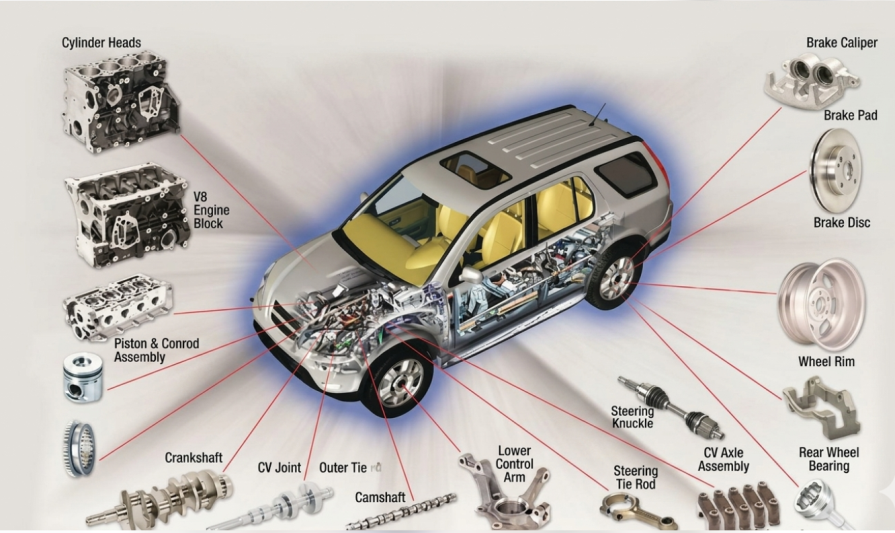
Scope: Includes everything from basic hardware and wiring to complex electronics, modules, and rare-earth components.
Geographic Focus: While primarily targeting China, the directive also encompasses other nations under U.S. trade restrictions, such as Russia and Venezuela.
Why Now? The Drivers of Decoupling
GM’s decision is driven by a "triage mode" caused by years of mounting external pressures.
Geopolitical Volatility: Escalating U.S.-China trade disputes and volatile tariff policies have made relying on a single distant source a massive business risk.
Export Restrictions: China’s tightening controls on critical materials—including semiconductors and rare-earth elements—have forced GM to seek more predictable domestic or "allied" sources.
Supply Chain Resilience: CEO Mary Barra has emphasized that the ideal scenario is sourcing parts in the same country where the vehicle is manufactured to avoid logistics disruptions.
The Challenges: Can It Actually Be Done?
Dismantling decades of integration is easier said than done. Industry analysts and suppliers have raised several red flags:
Deep Dependencies: China currently dominates automotive sectors like lighting, battery materials, and basic tooling.
Capital Intensive: Meeting the 2027 deadline may require suppliers to build entirely new factories and form new partnerships, requiring significant capital investment.
Cost Inflation: Shifting away from China’s low-cost manufacturing will inevitably lead to higher component costs in the short term, which may be passed on to consumers.
The Impact on the Automotive Landscape
If GM successfully completes this shift, it will set a new industry benchmark. We are already seeing "fast-follower" behavior, with reports that Tesla is initiating similar decoupling efforts for its 2027 supply chains.
The era of "globalization at any cost" is over. In its place is a new era of Regionalized Supply Chains, where localized production is viewed as the only way to ensure long-term stability in an increasingly fractured world.