Automotive Prototyping's Today and Future
From Clay to Code: The Transformation of Automotive Prototyping
For over a century, the "prototype" was the soul of the automotive design studio—a physical, breathing manifestation of a designer's dream. But as we move through 2026, the definition of a prototype is shifting. It’s no longer just a hand-sculpted clay model or a "mule" car wrapped in camouflage; it has become a sophisticated blend of data, light, and rapid physical manufacturing.
The Current State: The Hybrid Era (2025-2026)
Today, prototyping is defined by speed and operational integration. The industry has moved away from purely physical validation to a "hybrid" approach.
The Rise of 3D Printing: Rapid prototyping is no longer just for small plastic clips. In 2026, the automotive 3D printing market is projected to reach $5.31 billion. Brands like BMW and Ford are now using additive manufacturing for road-ready components, such as roof brackets and structural interior parts.
Virtual Validation: Before a single piece of metal is cut, vehicles undergo rigorous Virtual Prototyping. Crash tests and aerodynamic simulations that once required dozens of physical cars are now largely conducted in high-fidelity digital environments, saving millions in development costs.
Software-Defined Prototypes: In 2026, the "brain" of the car—the software—is as much a prototype as the chassis. Engineers now use "breadboards" (electronic prototypes) to test AI-driven infotainment and ADAS (Advanced Driver Assistance Systems) long before the car has wheels.
Development: The AI Revolution
The biggest leap in recent development has been the integration of Generative AI.
Design in Minutes: Generative AI has reduced the design cycle for vehicle renderings from days to mere minutes. AI assistants are now "digital employees" that help engineers hunt for historical data on past faults, reducing troubleshooting time by significant margins.
Preventative Quality: Instead of just finding defects in a finished prototype, AI now predicts them. By connecting inspection results to process conditions, manufacturers in 2026 are shifting from "quality inspection" to "quality prevention".
The Future: Digital Twins and the "Third Place" (2030 & Beyond)
Looking toward 2030, the prototype will evolve into a living Digital Twin—a virtual replica that exists for the entire lifecycle of the vehicle.
Fully Virtual Ecosystems: The digital twin market is projected to explode to $125.7 billion by 2030. These twins will allow for real-time vehicle management, where a "prototype" continues to learn from real-world data even after the car is sold.
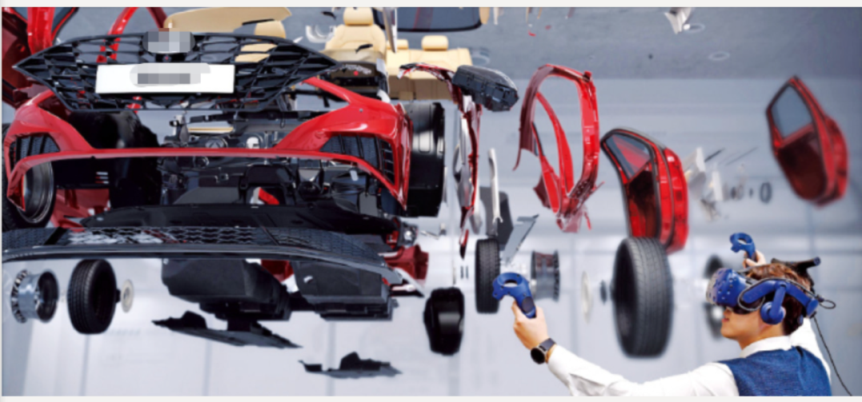
Immersive AR/VR Labs: Future designers will "step into" their prototypes using immersive VR/AR, making physical mockups nearly obsolete for ergonomic and interior testing.
The "Third Place": As autonomy matures, prototypes will focus less on driving dynamics and more on the cabin as a "living room" or "mobile office"—an environment for relaxation and interaction outside the home or office.
Conclusion
The automotive prototype is no longer a static object; it is a dynamic, data-driven process. While 3D printing ensures we can still touch and feel the physical car, AI and Digital Twins ensure that the car of the future is safer, more personalized, and brought to market faster than ever before.