
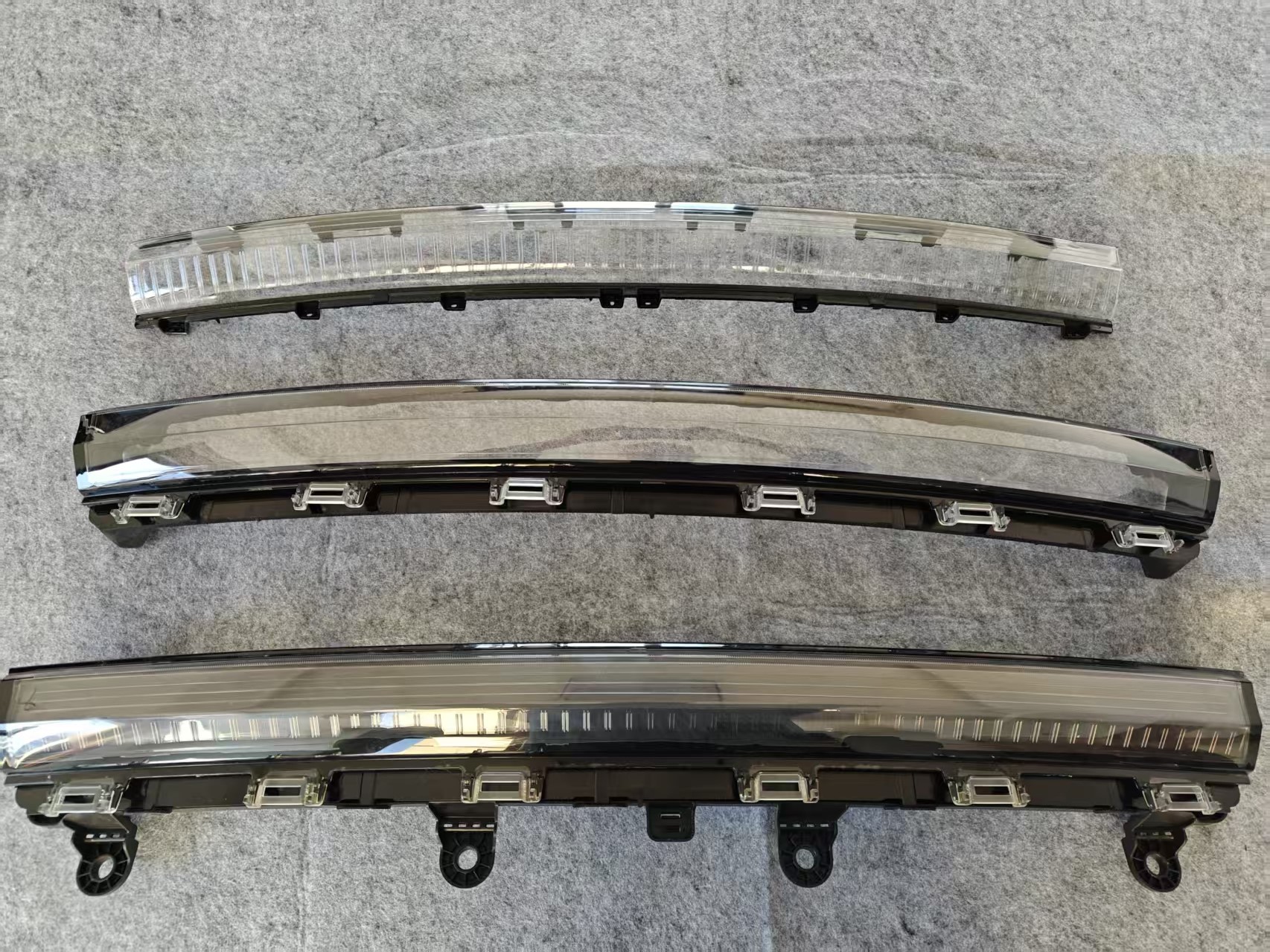
CL inner lens assembly-Overmold
Overmolding Technology for Lamp Assemblies
Two-shot overmolding integrates rigid base parts and flexible soft materials into a single finished lamp component. The workflow injects elastic media such as TPE and silicone onto prefabricated hard carriers made of ABS, PC/ABS alloy or aluminum. This integrated molding method delivers finished lamp parts with integrated sealing performance, comfortable touch and integrated structural integrity without secondary assembly.
Custom prototype tooling is essential to validate this dual-stage molding workflow prior to mass manufacturing, eliminating mass production risks caused by mismatched material bonding or structural design flaws.
Two Core Parts of Overmolded Lamp Units
Rigid Base Carrier (Primary Component)This foundational hard part covers lamp bases, mounting brackets and structural frames. Designers add through holes and undercut structures on the carrier surface, which lock tightly with the later injected soft material and boost interlayer bonding strength far beyond simple chemical adhesion.
Soft Overmold Layer (Secondary Component)We inject flexible materials including TPE, TPU and silicone onto the rigid carrier. This outer layer serves three core functions: forming IP-rated waterproof sealing rings, building anti-slip soft touch surfaces, and adding shock-absorbing protection for lamp shells.
Complete Two-Stage Prototype Molding Workflow
The prototyping cycle relies on two independent mold sets or interchangeable mold inserts to separate hard part forming and soft material cladding:
Fabricate the rigid substrate via dedicated primary prototype molds;
Transfer the cooled or semi-warm rigid workpiece into the secondary overmold cavity (manual placement for small-batch prototypes, automated robotic transfer for mass production lines);
Inject molten elastic material into the secondary cavity. The melted soft material flows into pre-designed undercuts and perforations on the carrier, forming a mechanically locked integrated lamp assembly after cooling.
Critical Design Rules for Lamp Overmold Prototypes
Material melting point matching: The rigid carrier material must withstand the injection temperature of the overmold layer to avoid surface deformation or melting during secondary injection;
Optimized gate positioning: Overmold injection gates are arranged on invisible non-exterior areas to guarantee flawless lamp surface appearance;
Cost-effective prototyping scheme: Separate independent molds are recommended for small-volume sample development to cut upfront mold development expenses.
Main Application Scenarios
This dual-material overmolding process is widely adopted for LED lamp housing waterproof sealing, handheld portable lamp anti-slip soft grip forming, automotive auxiliary lamp shockproof outer layers and other lighting component custom development.
Case picture shown:
Housing: PP-TD33
Inner lens: PC CLEAR+PC BLACK (Overmold)
Outer lens : PC CLEAR +PC BLACK (Overmold)