
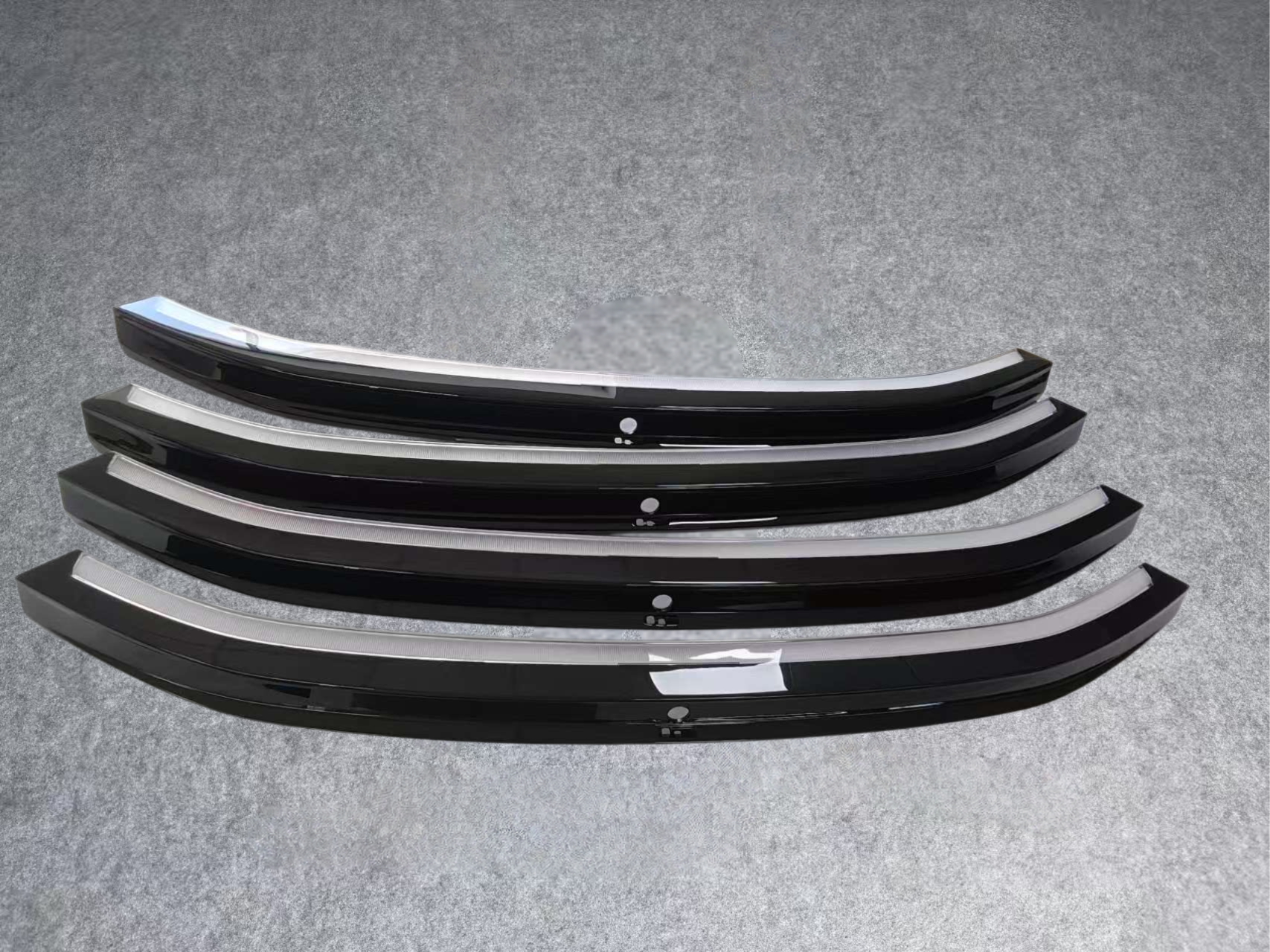
Tri-color Outer lens by Urethane cast overmold
A tri-color outer lens produced via urethane cast overmolding is a specialized manufacturing technique used to create complex, multi-colored, or multi-material optical components, often for low-volume production or prototyping. This process combines clear or tinted polyurethane resins with specialized silicone molding techniques to create a single, seamless, void-free part, frequently simulating injection-molded quality without the high cost of metal tooling.
Process Description:
Overmolding/Two-Stage Casting: A rigid substrate (the first component, potentially colored) is placed into a second silicone mold. A different, often flexible or differently colored, urethane resin is then cast over this substrate, creating a seamless bond.
Tri-Color Application: To achieve three colors, this process may be repeated, or the silicone mold may be designed with complex gating to allow multiple colored, liquid urethane resins to be poured into distinct, separate zones of the same mold cavity before curing.
Vacuum Casting: The liquid urethanes are poured into silicone molds under a vacuum chamber to eliminate air bubbles, ensuring high optical clarity in the lens areas.
·Curing: The part is cured in an oven to achieve final material properties, such as hardness (Shore A or D) and durability.
Characteristics of Tri-color Urethane Lenses:
Aesthetics & Functionality: Allows for the integration of three distinct colors, such as clear for lens areas and colored (e.g., red, amber) tints for bezel or indicator areas, in one durable unit.
Material Variety: Can combine hard, transparent urethane (for lenses) with flexible, rubber-like urethane (for seals or grips) in a single overmolded part.
Optical Quality: Clear polyurethane resins can mimic the transparency and impact resistance of acrylic or polycarbonate, making them suitable for lenses.
Rapid Prototyping: Ideal for low-volume runs (batches up to 20 or more) of complex, multi-color prototypes or, in some cases, final-use parts.
This method is specifically used to produce parts that require high impact resistance, specific coloring, and complex, detailed geometries where injection molding would be too costly