
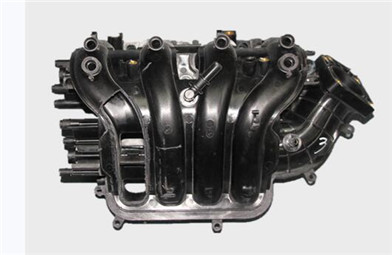
Manifold Urethane Cast Capaci...
Urethane casting manifold, is a low-volume production process that uses silicone molds to create high-fidelity, functional parts from liquid polyurethane resins. It is ideal for prototyping, testing, or producing 1–100 pieces with properties similar to injection-molded thermoplastics, including custom colors, textures, and varied hardness (Shore A to D).
Key Aspects of the Urethane Casting Process:
Master Pattern: A high-precision master, often made via 3D printing (SLA/SLS) or CNC machining, is used to create a flexible Silicone (RTV) mold.
Casting: Two-part polyurethane resins are mixed, often vacuum-degassed to remove bubbles, and poured or injected into the mold.
Curing: The mold is cured in a pressurized oven (2–12 hours) to ensure density and capture fine details.
Materials: Resins range from flexible elastomers to rigid plastics (like ABS-like or glass-clear polyurethanes).
Key Advantages:
Low Tooling Cost: Far cheaper than metal injection tools, making it ideal for "bridge tooling".
Rapid Turnaround: Molds can be made and parts produced within days.
High Quality: Excellent surface finish, high durability, and accurate detail reproduction.
Versatility: Capable of producing, overmolding, and hard industrial parts, such as seals, rollers, or housing.
Common Applications:
Functional prototypes for engineering design validation.
Marketing samples and visual models.
Short-run, end-use parts.
-
Industrial components requiring abrasion resistance.