
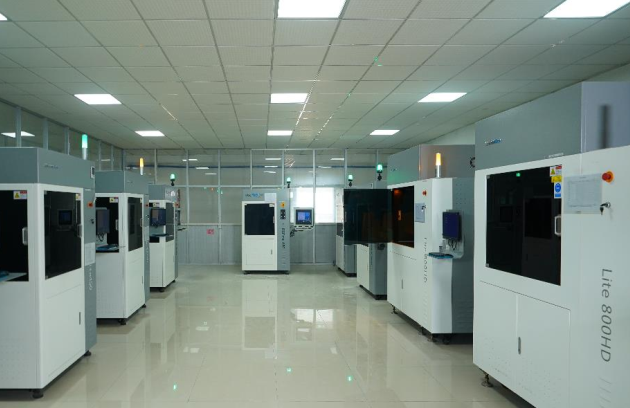
3D Equipment
SLA (Stereolithography) 3D printers are vat-polymerization machines that use a UV laser or light source to harden liquid photosensitive resin into precise, solid 3D parts, layer by layer. Known for high accuracy, superior surface finish, and fine details, they are popular for prototyping, dentistry, and jewelry.
Key Components and Functionality
Light Source (UV Laser/Projector): A laser—steered by galvanometers (mirrors)—traces the cross-section of each layer onto the resin surface, solidifying it.
Resin Tank (Vat): A container, typically with a transparent, flexible bottom (for inverted systems), that holds the photopolymer resin.
Build Platform: A flat plate that submerges into the resin and moves upward (inverted system) or downward (top-down system) incrementally for each layer.
Resin Materials: Specialized photosensitive resins that react to UV light, available in various formulations (rigid, flexible, castable).
Recoating Blade/Wiper: Ensures a fresh, consistent, and level layer of liquid resin is applied over the previously cured layer.
Operational Workflow
Print Preparation: A 3D CAD model is sliced into thin layers (typically 25-100 microns) using software.
Printing: The laser cures the resin layer by layer.
Post-Processing: The finished part is washed in a solvent (usually isopropyl alcohol) to remove excess resin and then cured in a UV oven to achieve final strength.
SLA vs. Other Resin Technologies
SLA (Laser-based): Uses a single laser beam to trace layers, providing high precision, especially for large, complex parts.
LCD/MSLA (Masked SLA): Uses an LCD screen to mask a UV light array, allowing the entire layer to be exposed at once, making it faster.
SLA printers range from desktop units to large industrial machine