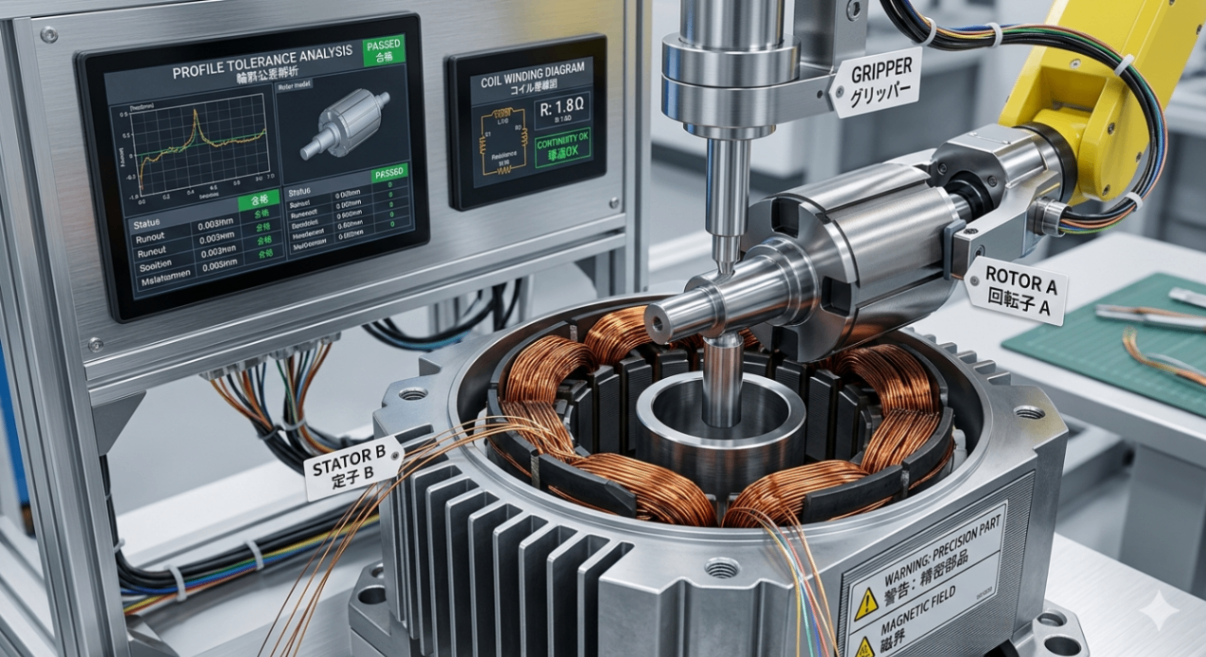
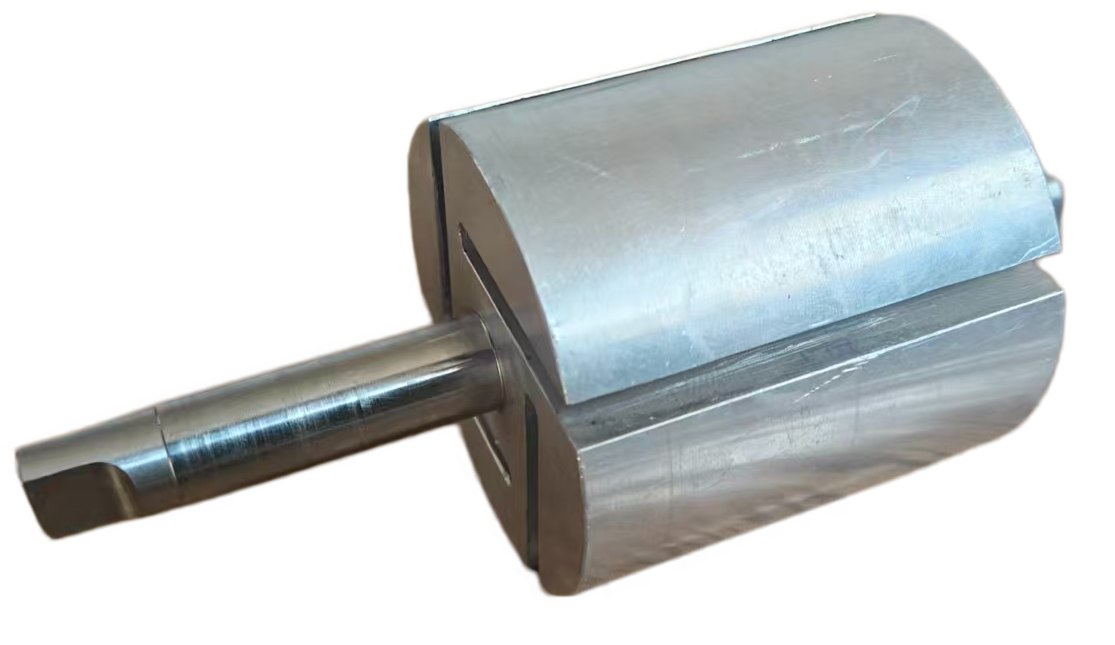
Rotor
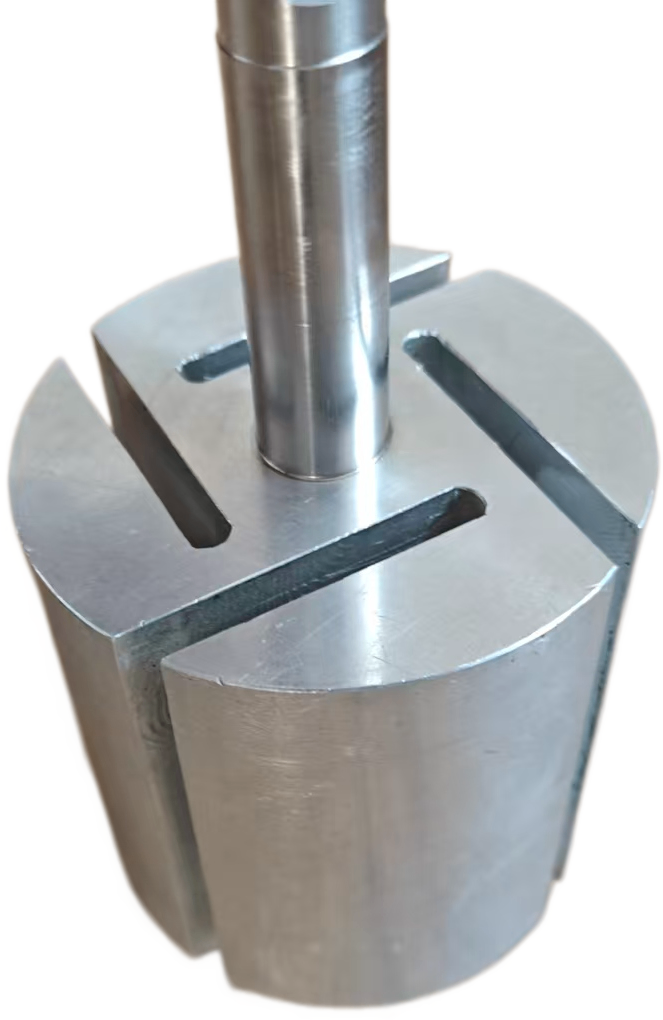
CNC machining of shaft motor rotor assemblies using stainless steel (for shafts) and aluminum billet (for rotor cores/components) is a high-precision manufacuring process designed to create components that are light,durabl, and balanced for high-speed operation. Aluminum billet, specifically, is used for its high strength-to-weight ratio, superior thermal conductivity, and machinability.
1. Materials and Their Roles
Aluminum Billet (6061-T6, 7075): Used for rotor bodies, end rings, and fans to reduce weight, lower inertia, and enhance heat dissipation.
Stainless Steel (304, 316, 400 series): Used for the rotor shaft. 304/316 offers excellent corrosion resistance, while 400-series (or 40Cr/45# steel) is often used for superior hardness and wear resistance.
2. CNC Machining Process Description
The manufacturing process combines CNC turning and milling to create complex shapes from raw, solid material
Rotor Shaft Machining (Stainless Steel):
Turning: CNC lathes are used to create precise diameters, bearing seats, and shoulder lengths, often requiring tolerances of $\pm$0.01 mm.
Milling: Multi-axis milling machines create keyways, splines, flats, or threads on the shaft, ensuring precise fitment for gears or couplings.
Grinding: Precision grinding is used to achieve extremely smooth surface finishes (Ra 0.4 μm or better) on bearing surfaces to minimize friction.
Rotor Body Machining (Aluminum Billet):
CNC Milling/Turning: A solid block of aluminum is carved to create the rotor structure, cooling fins, or slots for magnets/winding.
Boring: High-precision boring is used for the center hub to ensure a tight, secure interference fit with the stainless steel shaft.
3. Assembly and Post-Processing
Interference Fit (Shrink/Press Fit): The aluminum rotor body is usually heated, and the stainless steel shaft is cooled (or vice-versa) before being pressed together, creating a permanent, tight, and secure connection.
Dynamic Balancing: Because these assemblies often rotate at high RPM, the combined assembly is dynamically balanced by removing tiny amounts of aluminum material from designated areas on the end rings to minimize vibration.
Surface Treatment: Aluminum parts are often anodized to improve corrosion resistance and aesthetics, while steel parts may be passivated or polished.
4. Key Advantages
High Precision: CNC milling of billets ensures high dimensional accuracy (often to $\pm$0.0005 inches or tighter).
Structural Integrity: Billet material has a consistent grain structure, preventing internal voids or air pockets often found in cast components, leading to stronger, more reliable rotors.
Lightweight & High Efficiency: The combination of an aluminum body with a steel shaft results in lower inertia, allowing faster acceleration and higher speeds.
Excellent Thermal Management: Aluminum's thermal properties aid in heat dissipation, preventing overheating in the motor.
This combination is widely used for premium motor designs in aerospace, electric vehicles (EV), and high-performance industrial equipment