
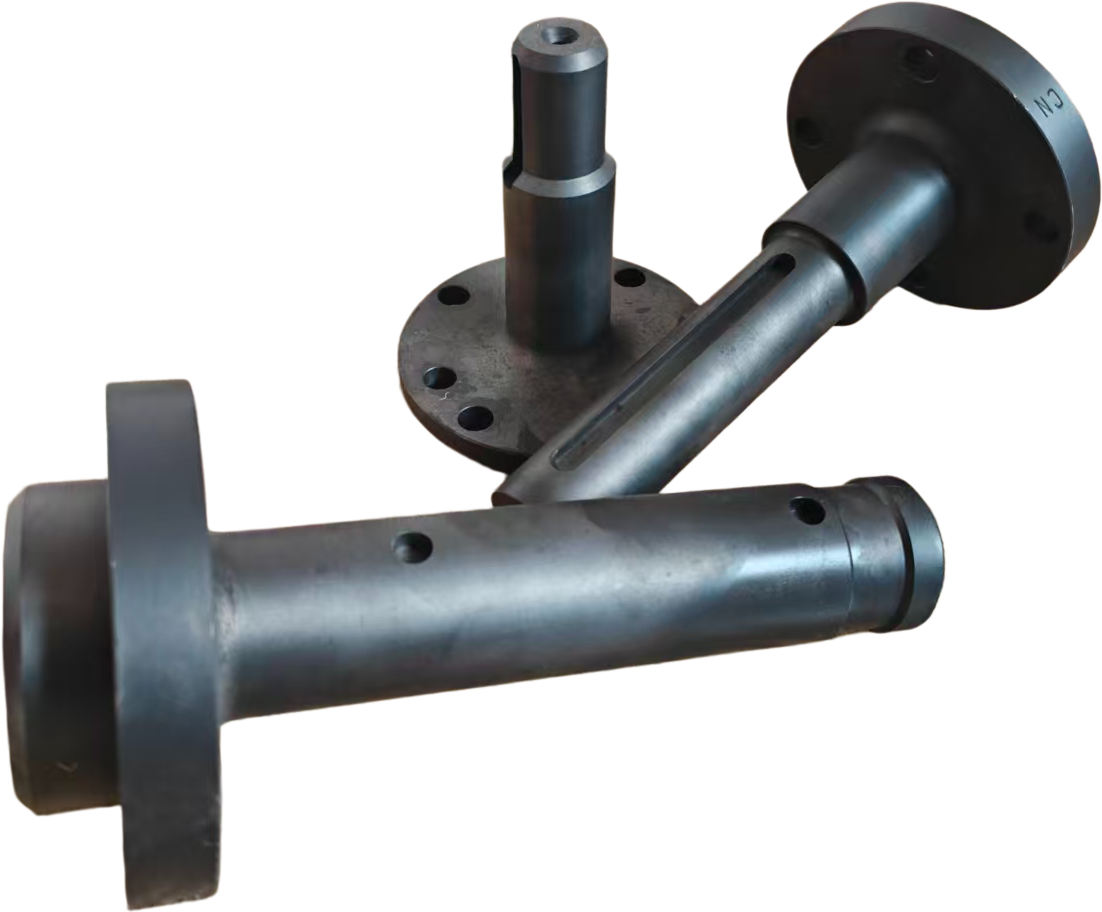
Spindle flange
A forged spindle flange is a high-strength, circular metal fitting—usually made of steel—manufactured by shaping metal under high-temperature and immense pressure (forging). It is specifically designed to act as a connection point, a bearing seat, or a strengthening component on a rotational shaft (spindle) or in high-stress, high-pressure, and high-temperature piping systems.
Key Definitions & Characteristics:
Manufacturing Process: Unlike cast flanges, these are formed while solid by hammering or pressing, which refines the grain structure to enhance durability and eliminate internal defects like porosity or voids.
Function: It is used as a projecting rim, collar, or disc to join, connect, or seal shafts, pipes, valves, or pumps, often allowing for easy disassembly.
Key Attributes: These flanges feature high tensile strength, excellent resistance to fatigue and wear, and the ability to withstand high shear forces.
Applications: Commonly used in machinery (e.g., lathe spindles), power generation, chemical plants, and oil & gas pipelines.
Common Types
Weld Neck Flange: Features a long, tapered neck for high-stress applications.
Slip-On Flange: Slides over the pipe, allowing for easy alignment.
Blind Flange: Used to seal the end of a piping system.
Socket Weld Flange: Ideal for smaller, high-pressure pipes.
Forged vs. Cast Flanges:
Forged flanges are generally superior in performance and reliability compared to cast flanges, offering better structural integrity and higher safety factors for critical applications, albeit at a higher production cost