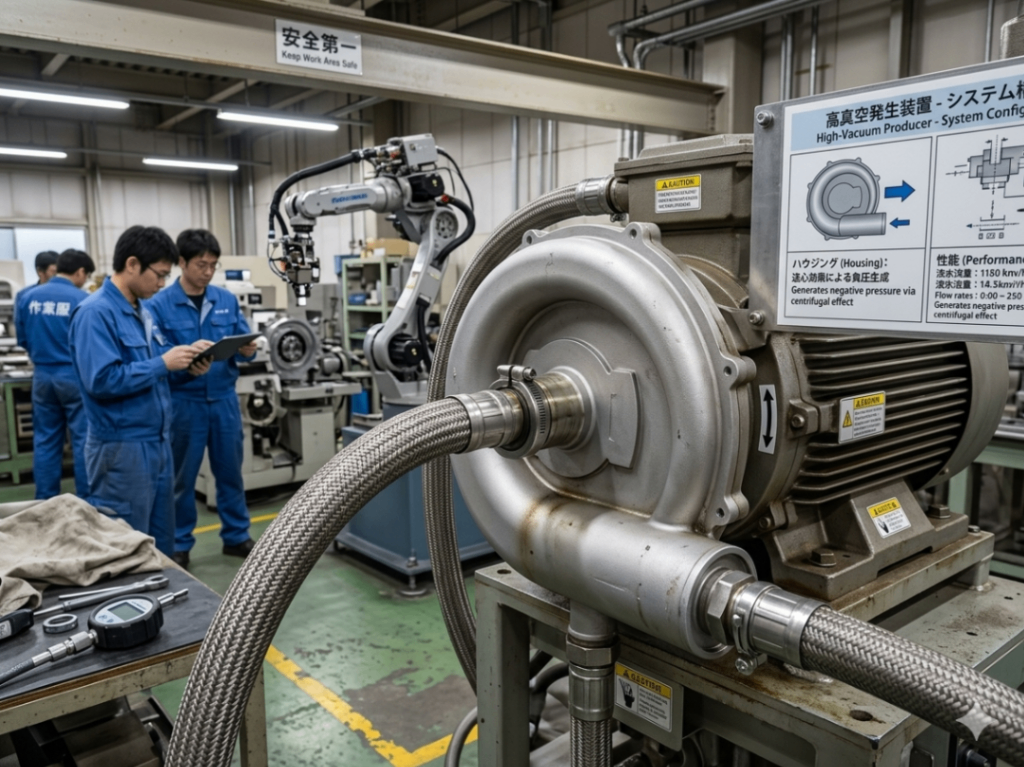
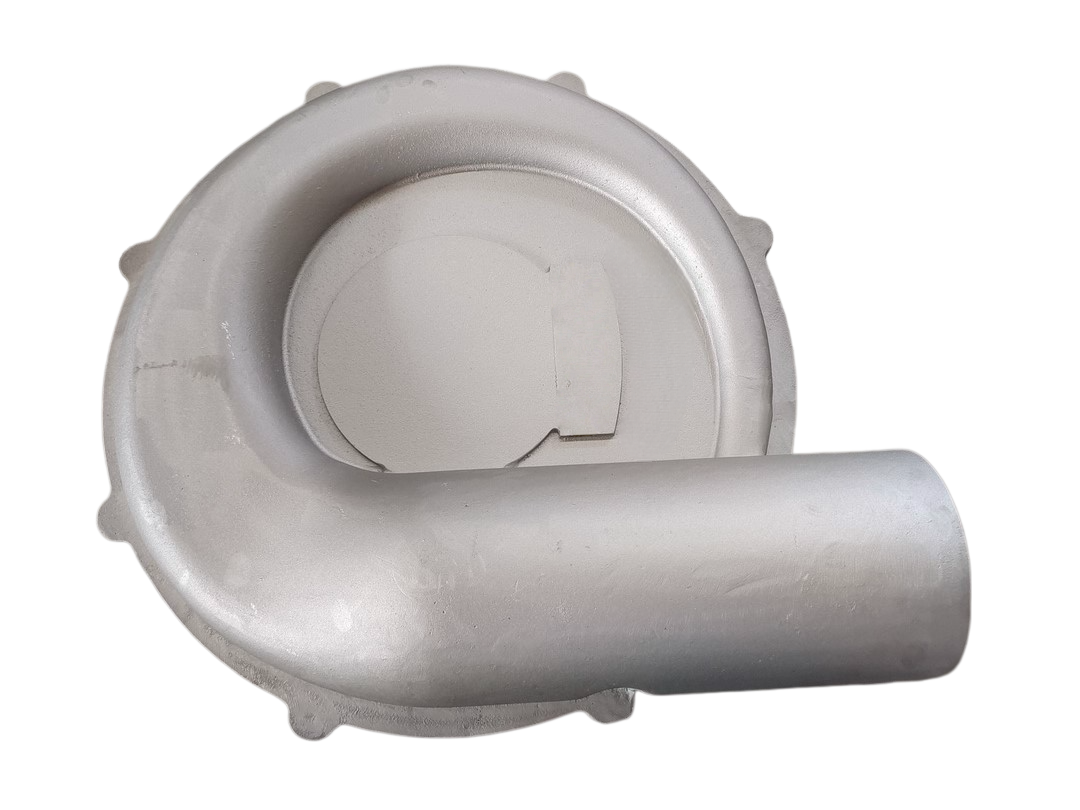
Vacuum producer housing
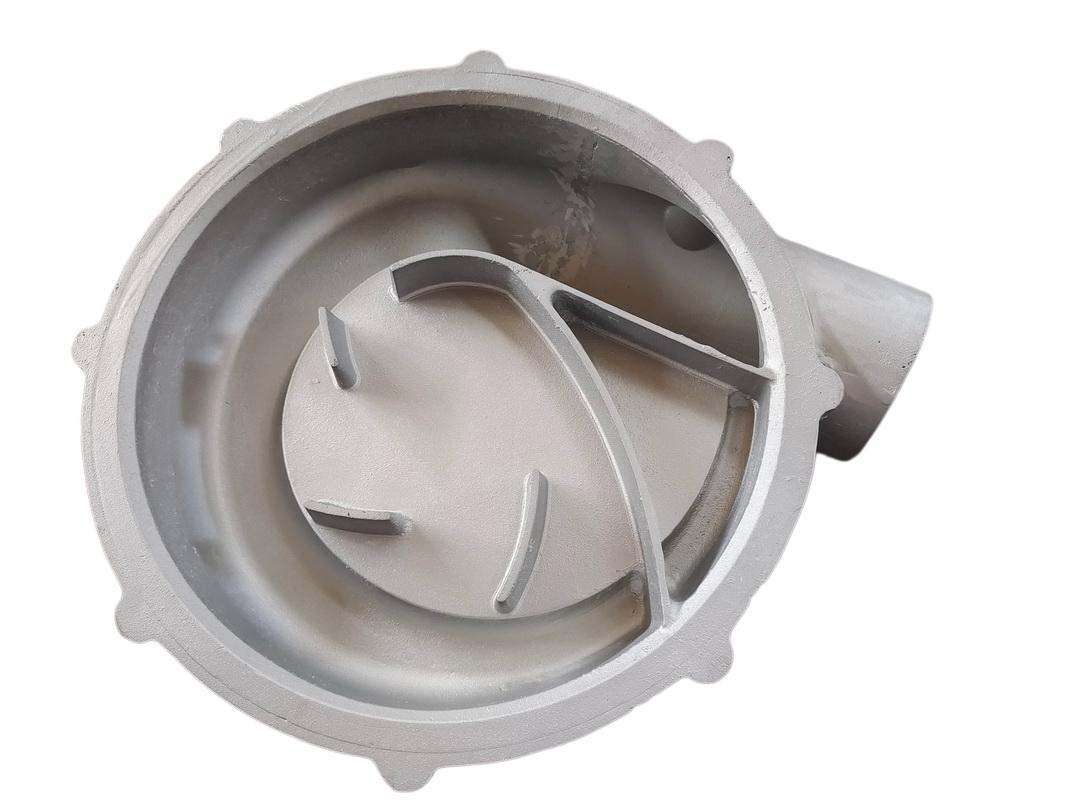
Large-size aluminum vacuum housing sand casting is a specialized manufacturing process used to create robust, low-porosity, and complex components for industrial vacuum applications. This process typically involves either high-end no-bake (air set) sand casting for large, heavy parts.
Key Features of Aluminum Sand Cast Vacuum Housings
High Integrity Alloy: Commonly produced using high-quality aluminum alloys like A356 often heat-treated to a T6 condition for enhanced strength and pressure tightness.
Large Size Capacity: Suitable for producing parts ranging from large blower housings (e.g., 24 inches wide) to large industrial, rectangular, or complex vacuum chambers.
High Vacuum Compatibility: When properly cast, these housings can hold high vacuum levels (e.g., up to 29.9" Hg).
Dimensional Stability: The use of rigid sand molds (specifically V-process or no-bake) ensures consistent dimensions and structural integrity.
Primary Casting Methods
No-Bake/Air Set Sand Casting:
Description: A mixture of sand and a fast-curing chemical binder is used to form the mold.
Benefits: Excellent for large-volume, complex geometries, and often used for heavy-duty industrial housings
Cost-Effective Tooling: Significantly lower initial setup costs for large parts compared to die casting.
Reduced Porosity: The use of vacuum during the pour (in V-process) results in fewer gas holes, which is crucial for maintaining a vacuum.
Design Flexibility: Can create complex, intricate internal features using cores.
Good Machinability: Aluminum is easily finished to meet tight sealing tolerances.
Typical Applications
Large industrial vacuum chambers for degassing, resin infiltration, or manufacturing.
Large industrial blower housings.
Hollow electronics housings.
Research and development equipment (e.g., test chambers).
These vacuum housings are frequently used for applications where helium leak tightness is required