
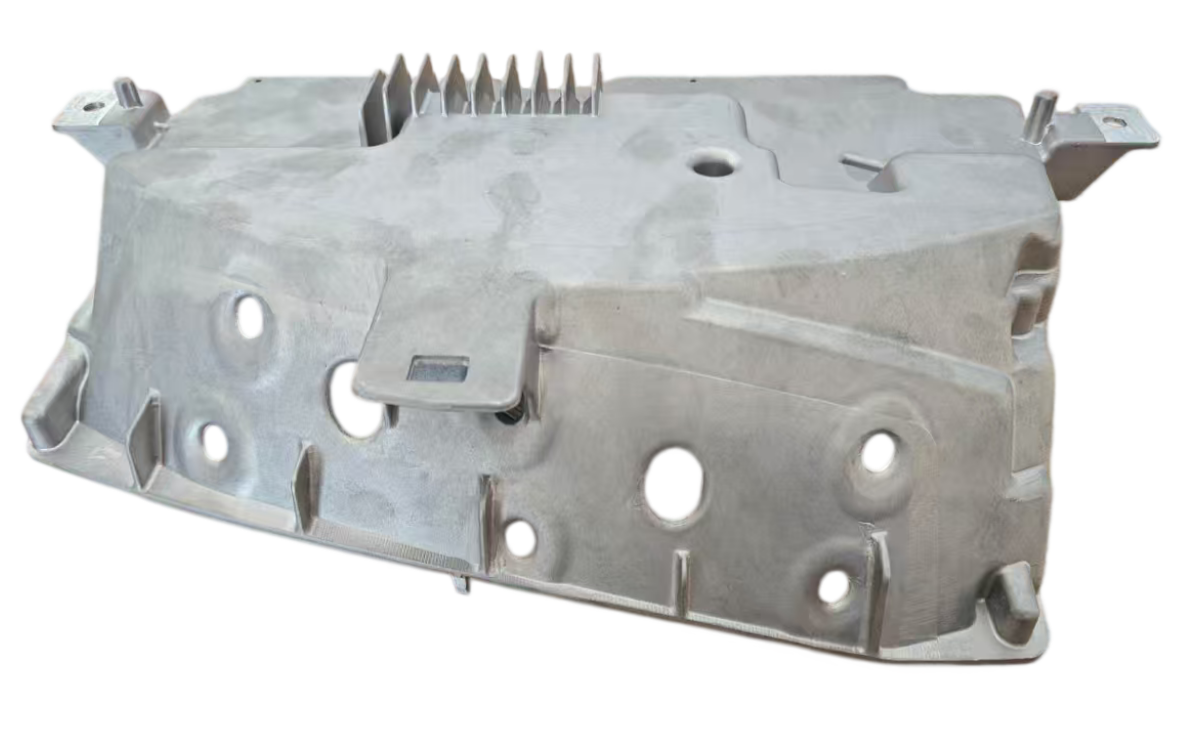
HUD Cover
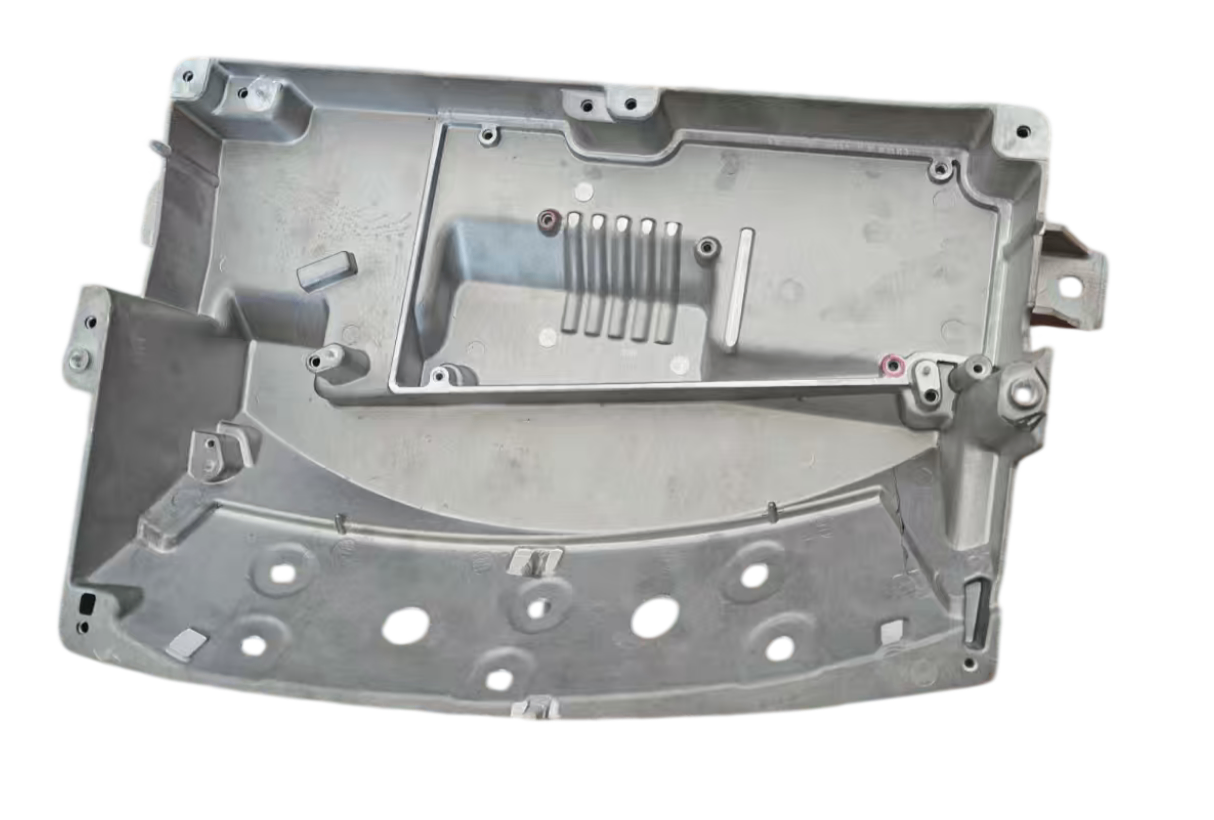
This aluminum die-casting is a critical structural component typically identified as a Head-Up Display (HUD) bracket. In modern automotive design, it serves as the rigid mounting platform for the HUD's optical projection unit.
Exact Location
The bracket is located deep inside the dashboard (instrument panel), specifically positioned behind the instrument cluster and directly beneath the dashboard's top cover. It is precisely aligned with the driver's line of sight and the "HUD window" on the dashboard surface. Its primary job is to hold the projection system perfectly still, ensuring the digital image remains stable and correctly focused on the windshield, even while the car is moving or vibrating.
Manufacturing Process Description
The production of this part involves several high-precision engineering stages:
-
High-Pressure Die Casting (HPDC): Molten aluminum alloy (commonly ADC12 or A380) is injected into a precision-engineered steel mold at extremely high pressures (up to 1800 bars). This allows for the creation of the complex, thin-walled geometry seen in your image, providing an excellent strength-to-weight ratio.
-
Solidification and Ejection: The metal cools rapidly within the water-cooled mold. Once solidified, the mold halves separate, and ejector pins push the "near-net-shape" part out.
-
CNC Precision Machining: Because HUD systems require extreme optical alignment, the casting undergoes secondary CNC milling and drilling. This ensures that the mounting points have incredibly tight tolerances (often within ±0.05mm).
Surface Finishing: The part is typically shot-peened or sandblasted to remove burrs and improve fatigue resistance. Finally, a chromate conversion coating or powder coating may be applied to prevent corrosion and ensure long-term durability within the vehicle's interior environment.