Aluminum Casting-Heatsink
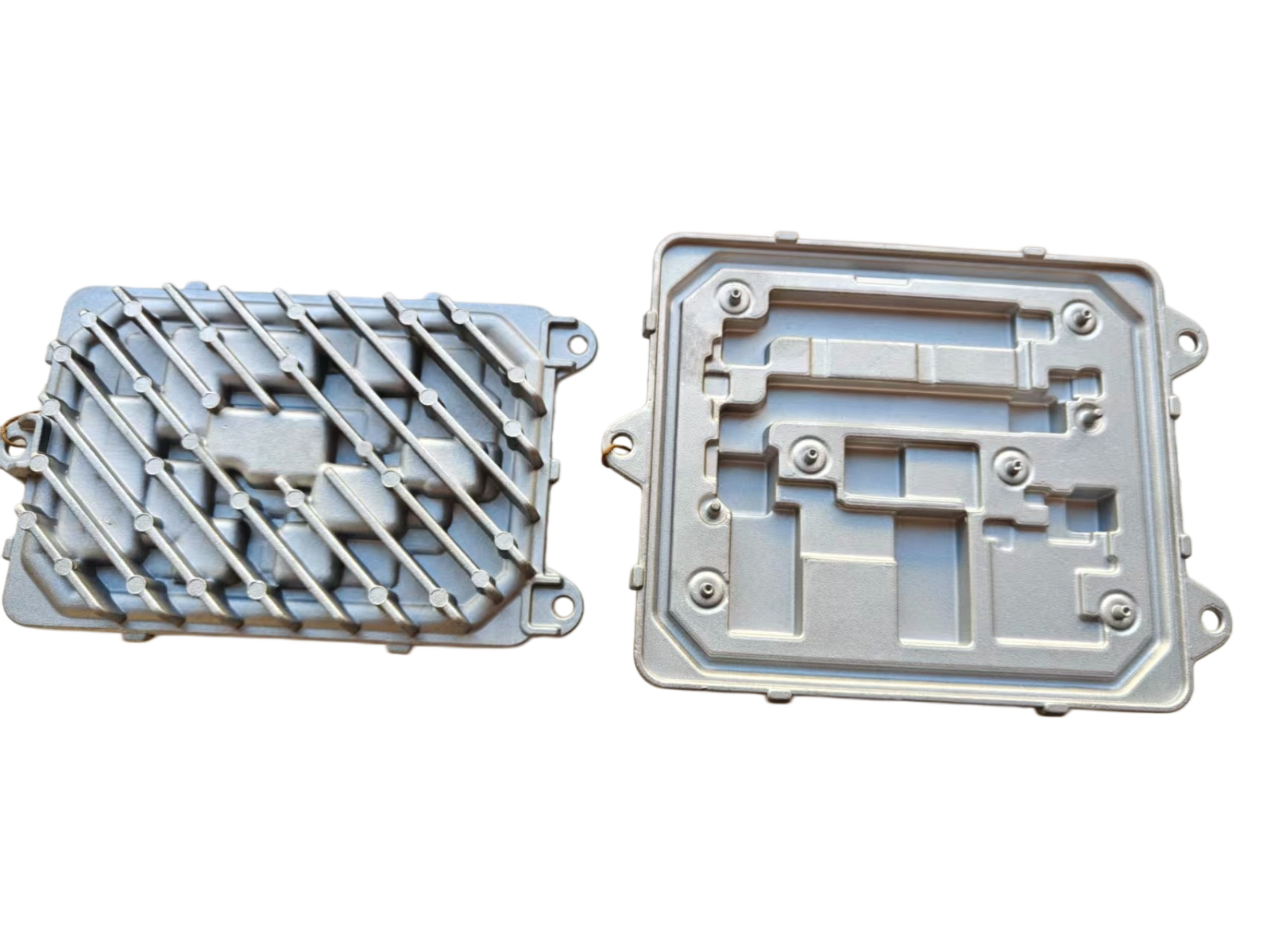
Aluminum die casting heat sinks are high-pressure, cast-metal components designed for thermal management, forcing molten aluminum (commonly ADC12) into molds to create complex, finned, one-piece structures. These lightweight heat sinks offer high dimensional stability and superior efficiency for high-volume, detailed cooling solutions in LED lighting, automotive, and electronic devices.
Key Definitions and Characteristics
Manufacturing Process: Molten aluminum is forced into hardened steel die molds under high pressure, creating solid, complex geometries with high accuracy.
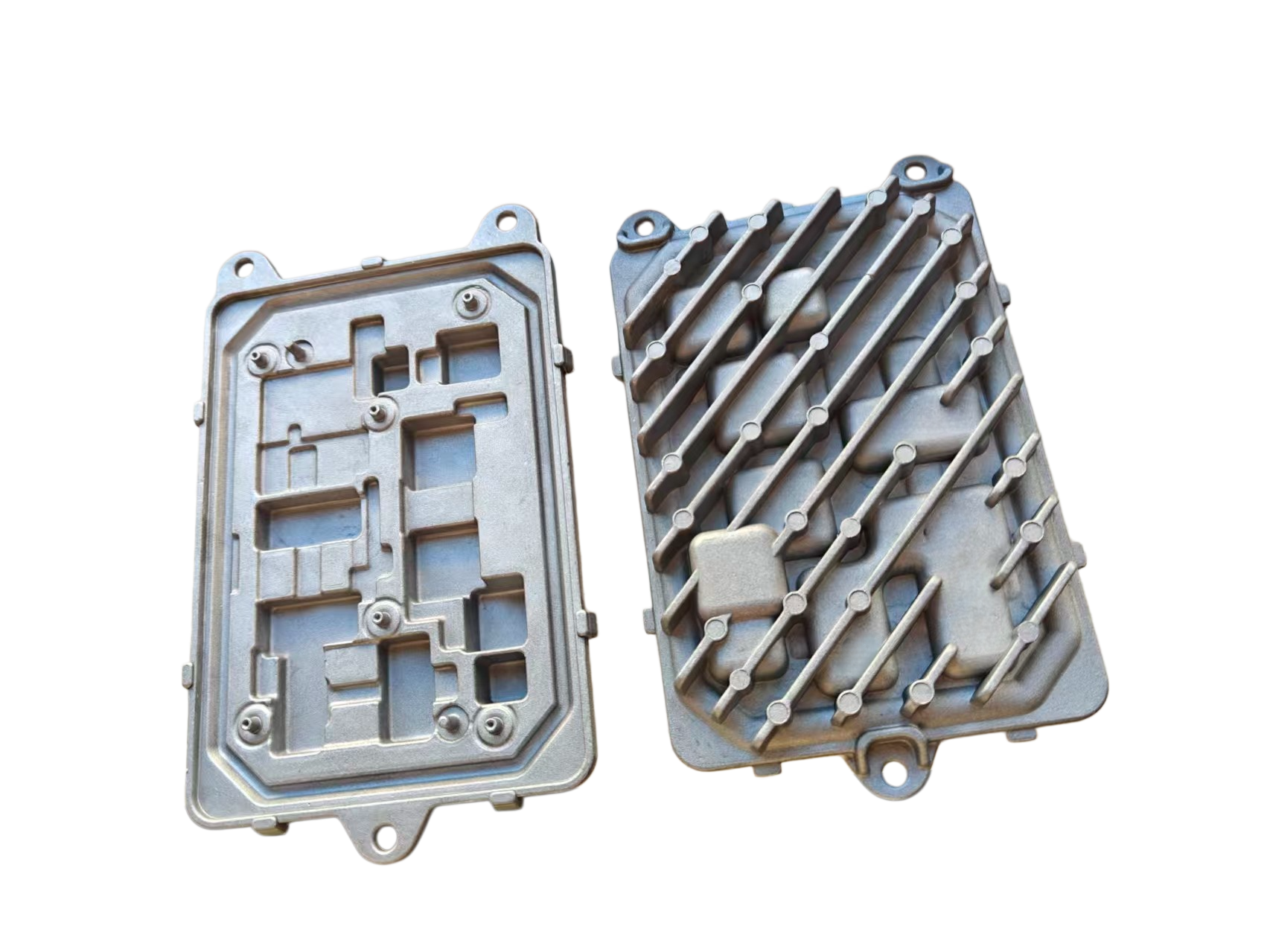
Structure: Comprises a base and integrated fins or pins, usually manufactured in two halves (cover and ejector) that result in a parting line.
Materials: Typically use aluminum alloys like A380 or 356.0 for a balance of thermal conductivity and durability.
Key Advantage: Ability to integrate complex shapes and mounting features directly into the design, reducing the need for assembly or excessive machining.
Comparison and Application
Vs. Extruded Heat Sinks: Die casting allows for more intricate, complex fin shapes and higher production volumes, whereas extrusion is better for simple, linear shapes.
Performance: While offering good thermal conductivity, die-cast heat sinks may have slightly lower thermal performance than solid extruded aluminum due to potential, though minimized, internal porosity.
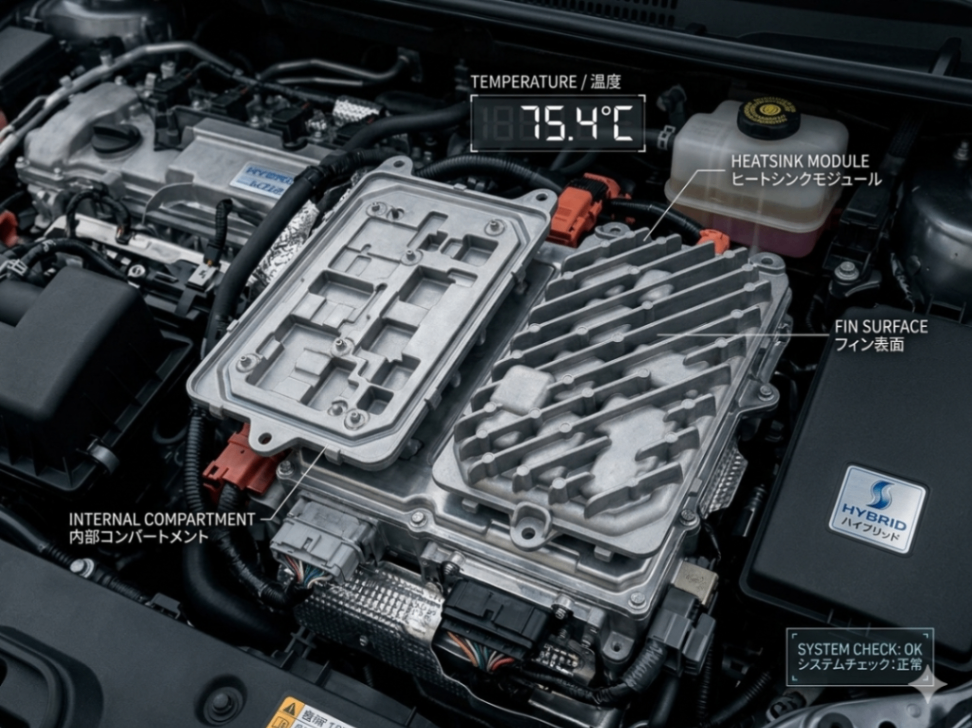
Key Applications: Used for high-power electronics, LED lighting fixtures, automotive components, and military electronics
Contact us for more information.