
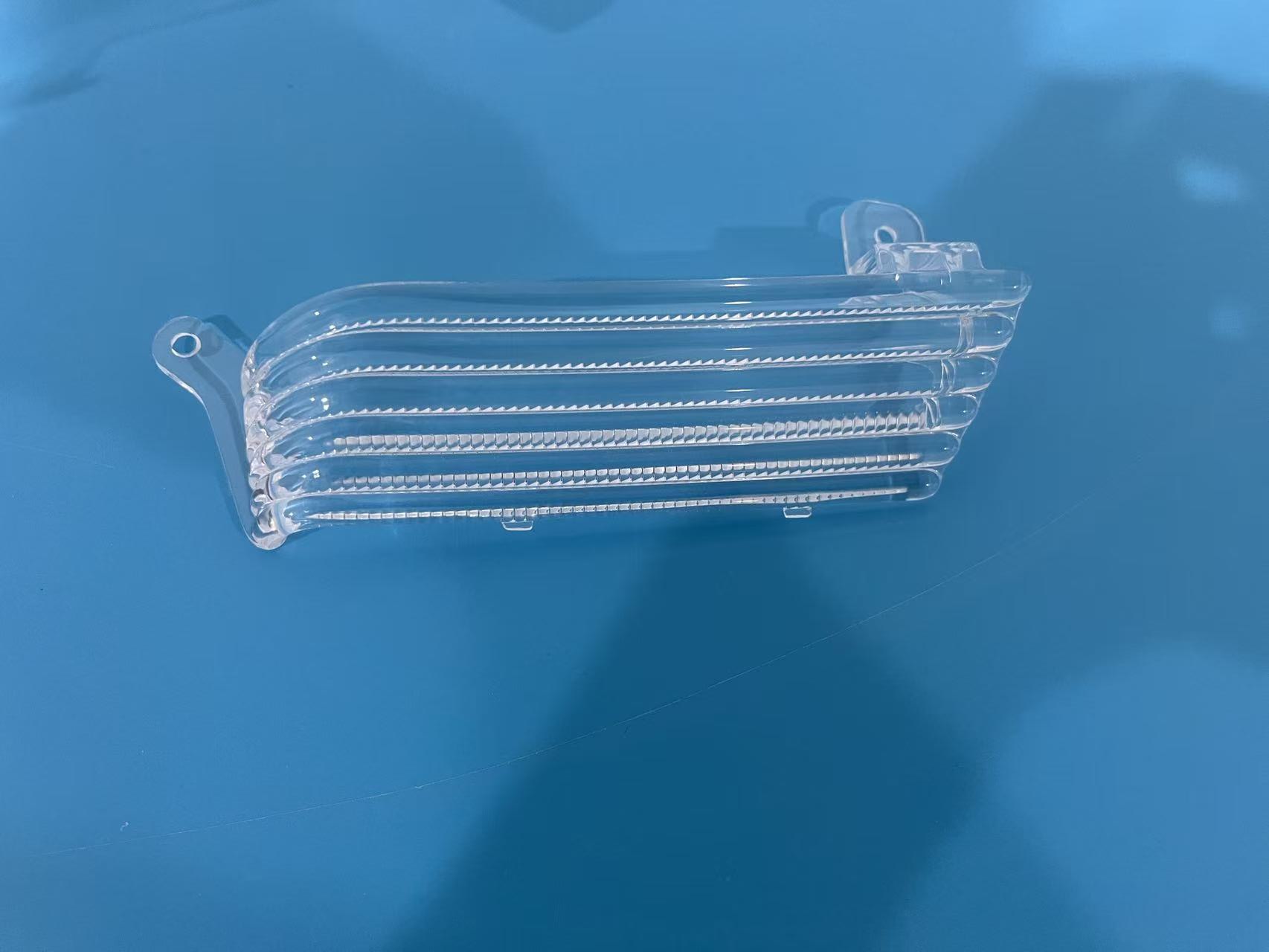
Injection molding Light Pipe
Key Characteristics of Light Pipe Injection Parts
Materials: Typically, optical-grade PC (for heat resistance and durability) or acrylic is used for high clarity.
Design Features: Features include Fresnel lenses for focusing light, scattering textures to enhance dispersion, and polished surfaces for maximum internal reflection.
Types:
Shapes: Can be customized in round, rectangular, or complex, customized shapes to fit the enclosure design,
Surface Finish: Surfaces must be highly polished or molded with precision to ensure effective total internal reflection and prevent light leakage
Rigid Light Pipes: Molded, solid plastic rods for direct, short-distance transmission.
Flexible Light Pipes: Optical fiber or flexible plastic used to navigate complex paths within an enclosure.
Injection Molding Considerations
Tooling Quality: The injection mold (tooling) must be high-quality and polished to optical standards to ensure the part is perfectly transparent and efficient.
Material Selection: Factors such as operating temperature, environmental resistance (for outdoor use), and flammability requirements (e.g., UL94 V-0) are crucial when selecting the resin
Optical Design: The light pipe design must account for the LED's beam angle and intensity, with the input end designed to match the LED's emission characteristics
Eliminating Light Bleed: Many designs incorporate molded features that ensure a tight fit with the PCB, minimizing light leakage between the source and the pipe.