
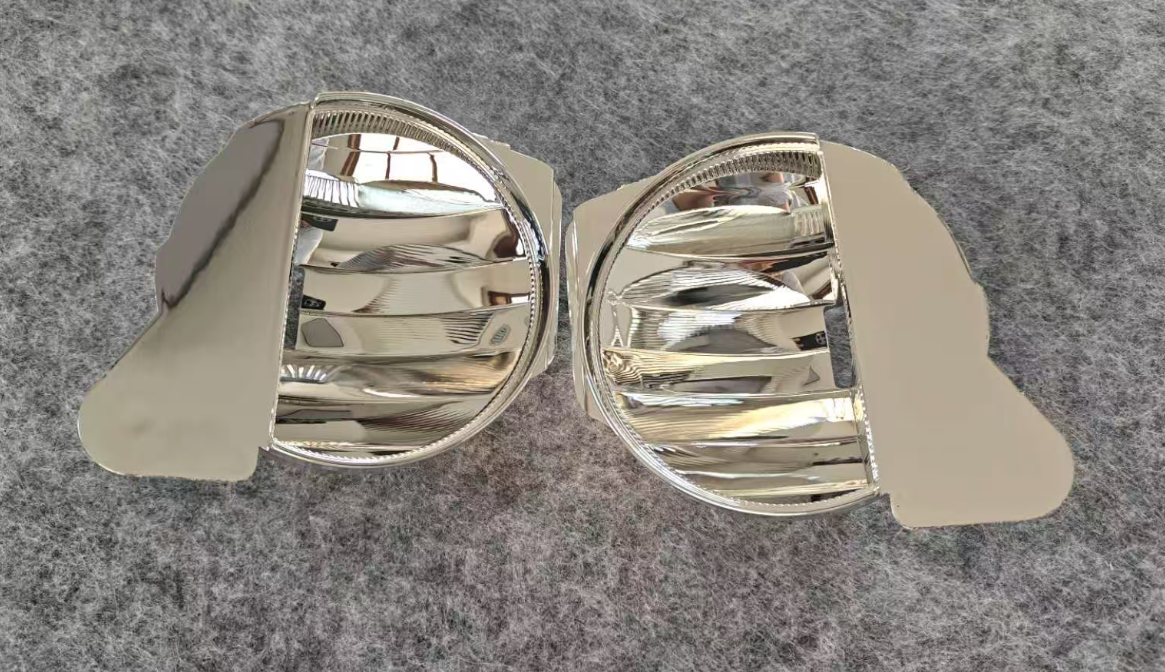
Injection molding Reflector
Reflectors with metallized finishes are typically produced by injection molding plastic resins (like polycarbonate or ABS or BMC) into high-precision, polished steel molds, followed by vacuum metalizing (PVD) to apply a thin aluminum layer. This process combines lightweight, complex plastic shapes with superior reflective performance for automotive, lighting, and industrial applications.
Key Aspects of Molded Metallized Reflectors:
Injection Molding Process: Plastic is injected into a heated, high-gloss mold cavity (often SPI-A2 or A3 standard) to ensure a perfectly smooth, mirror-like base surface.
Materials: Common plastic substrates include Polycarbonate (PC), which offers high heat resistance for automotive lights, and ABS.
Vacuum Metallizing (PVD): The molded "green" part is placed in a vacuum chamber, where aluminum or chrome is vaporized and condenses, creating a highly reflective coating.
Design Considerations: Molds often require complex, small-curvature designs (e.g., parabolic shapes, cube-corners) for precise light control and distribution.
Applications: Primarily used in automotive headlamps, rear reflectors, flashlights, and reflectors for LED lighting.
Key Challenges & Quality Control:
Surface Perfection: The mold surface must be defect-free, as any flaws are magnified by the metallic coating.
Moisture Removal: Plastic resin must be dried to below 0.02% to prevent bubbles or surface imperfections that ruin the vacuum coating.
Cooling Time: Precise control of cooling is required to minimize internal stress and distortion in the complex optical shapes.